
"12 Inch" size of a key which was used for old Chettiar Mansion those days. The weight of this key almost 1kg. Bought from India.

The Tamil Treasure blog was established on July 2011 to showcase information of the items collected to everyone and build bridges of understanding and friendship with our multicultural society. Through informative materials, special events and cultural sharing that this blog has received multiple positive feedbacks on its representation of contemporary Indian culture as well as preservation of the old and treasured. All the items showcased in this blog are for our own references.
 Another version of arukamanai with intricate and deep carving. One of oldest type arukamanai in our collections. Believed used in late 19th century. Interesting piece, along with iron wheels with floral design carving. According some sources this arukamanai was probably used as a wedding gift those days. If we notice, the sharp edge of this arukamanai can be fold when we never use. Convenient and safe.
 This miniature arukamanai is a tool used for cutting vegetables. This arukamanai was used widely during old days. The advantage of arukamanai is very convenient to cut vegetables and quick work for olden people. Some arukamanai is always a provision in the top to scrap fresh coconut. The size of this arukamanai only little bigger than a marker pen. Very interesting piece and miniature size. The wood part they used teak wood. Believed used in 1940's era.
 This cash box was made in England with velvet cloth drape around it. Exported from England in those days by M.A Pitchay Guny & Co. Penang. It was used by wealthy Tamil communities and believed to be practiced by Chettiar community to keep financial accounts & credit. The key of this cash box is still together with it. This item was bought in India and it shows that this item travelled to India with the person who bought this in Penang. The initial had been inscribed on it. Very heavy and it was made from copper & iron. There is a compartment to keep cash. Very interesting collectible.
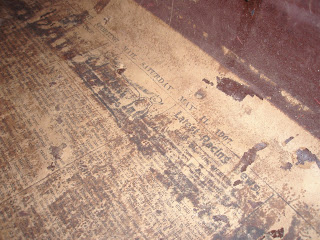

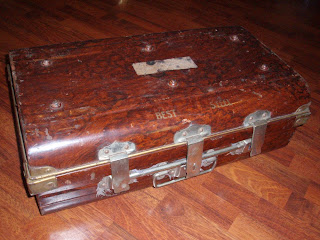 This is the travelling chest which I mentioned in one of my blog earlier. This travelling chest also called as the trunk. This trunk normally used to carry personal belongings for travelling. This trunk was made from England and it is shown on it. The age of this trunk believed to be more than 100 years old. The first picture on the left you can see the newspaper imprint, used to be a layer to protect the clothes from getting dust or rust and the you can see the imprint it is dated May 11 1907. On the top of the trunk, we can see there is some Tamil writings. This travelling chest was bought in Penang from an owner.

 A trunk, also known as travelling chest, is a large cuboid container for storing cloths and other personal belongings just like any other travelling bag, typically about 1.5 m (4 ft 11 in) wide, and .5 m (1 ft 8 in) each deep and height (source Wikipedia). They were most commonly used for extended periods away from home, such as for long or short trips abroad.


